Taxing Times: Business Confidence Slumps as Budget Uncertainty Bites
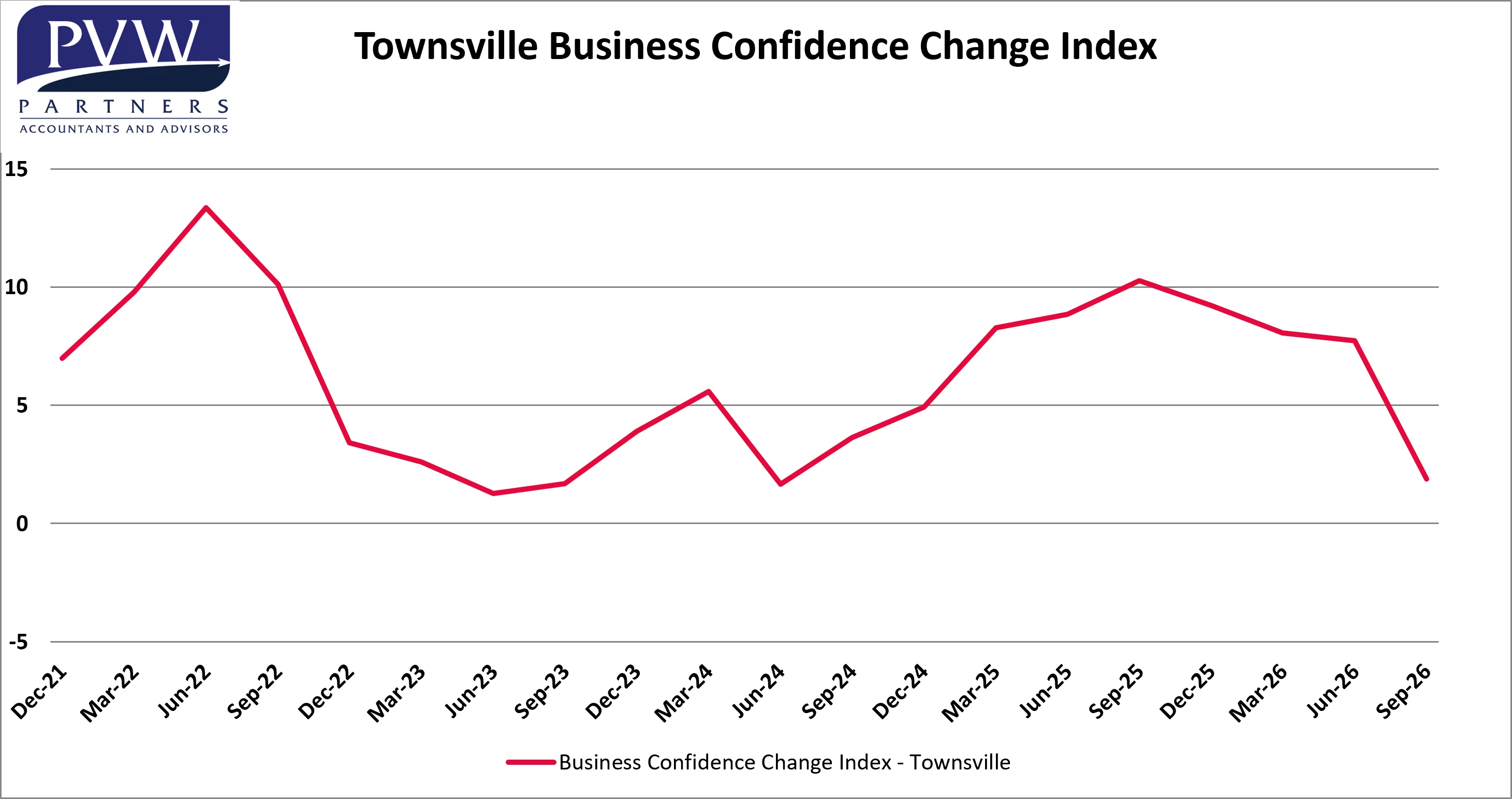
Townsville businesses are putting growth plans on hold as uncertainty surrounding the Federal Budget weighs on confidence, according to the latest PVW Partners Business Confidence Survey.
The survey recorded a sharp fall in confidence from 7.7 to 1.9, a reduction of 5.8 points, reflecting growing caution across businesses of all sizes, from small enterprises through to organisations with annual turnover exceeding $10 million. This caution appears to be driven by a lack of clarity surrounding proposed tax reforms, prompting many North Queensland businesses to delay spending and investment decisions.
While businesses remain resilient, the survey suggests many are adopting a "wait-and-see" approach as they seek greater certainty around the Government's policy agenda.
PVW Partners Partner Sonia Chalk said the results point to uncertainty rather than pessimism.
"The Federal Budget has created a level of uncertainty that is influencing business decision-making. Rather than making significant changes, many respondents are choosing to pause until there is more clarity around how proposed policies will ultimately be implemented."
One of the strongest indicators of this cautious outlook is an expected reduction in discretionary spending, with businesses signalling they are likely to scale back expenditure on sales promotions, advertising and entertainment over the coming months.
Encouragingly, respondents are not forecasting significant cuts to capital expenditure, suggesting confidence in long-term growth remains intact despite short-term uncertainty.
"The positive finding is that businesses are not stepping away from investment altogether," Ms Chalk said.
"The survey indicates they're preserving capital projects where possible, but delaying discretionary spending until there's greater certainty around future legislation."
The survey also explored business sentiment surrounding the Federal Government's proposed changes to capital gains tax (CGT), negative gearing and trust taxation.
Almost half of respondents believe changes to CGT and negative gearing will affect their business, with nearly 60 per cent expecting that impact to be adverse.
Similarly, around half of businesses expect the proposed trust taxation measures to affect their operations, with most anticipating an unfavourable outcome.
Although legislation relating to CGT and negative gearing has now been passed, proposed trust taxation reforms remain in consultation, leaving businesses uncertain about the final form and timing of any changes.
Ms Chalk said this uncertainty is proving just as significant as the policies themselves.
"Historically, major tax reforms can take years to progress through consultation and legislative processes. Until businesses understand exactly what the final measures will look like, many are choosing to hold off on decisions that could affect future growth."
PVW Partners will continue monitoring business sentiment through its regular Business Confidence Survey to help identify emerging trends and provide insight into the issues shaping the regional economy.